
How does a standard porta potty work?
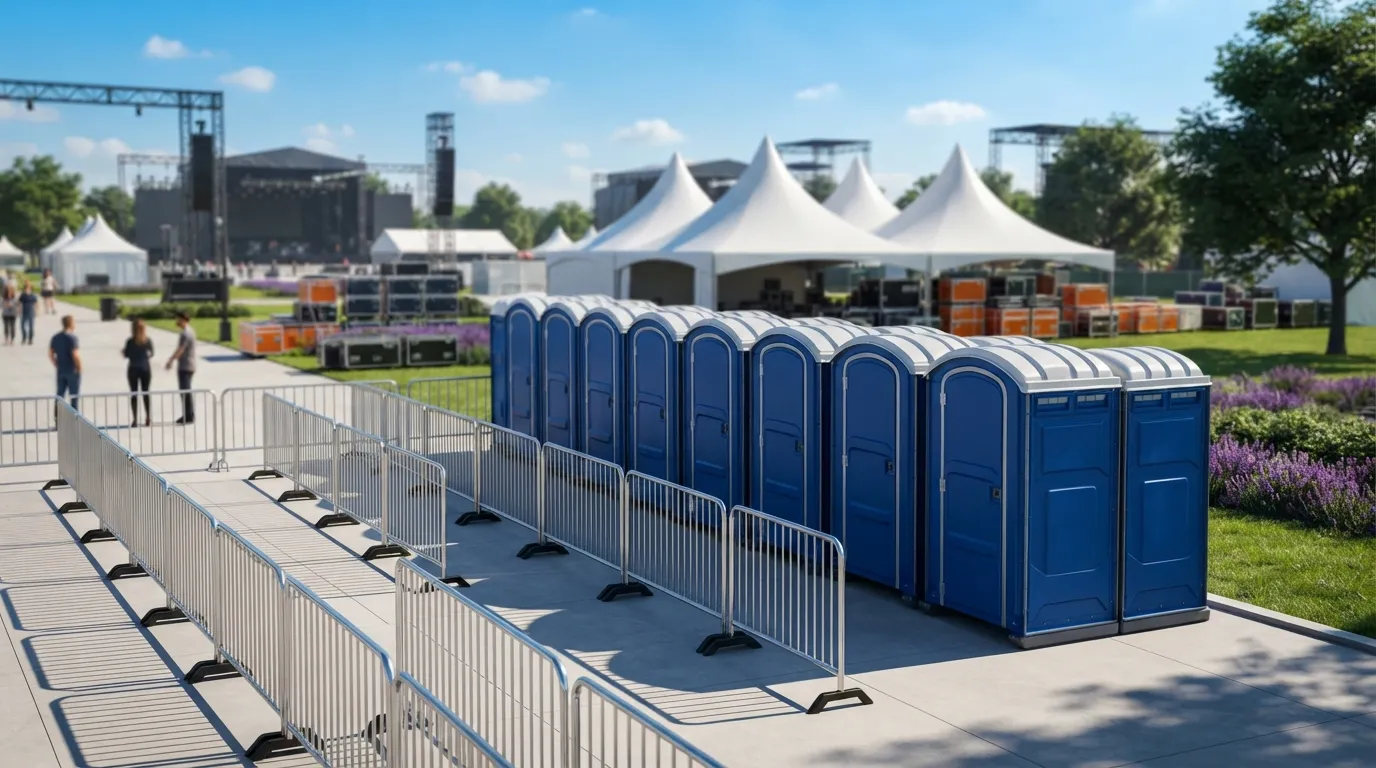
No plumbing, no flush handle, no mystery. A standard unit is about 44 by 48 inches on the ground and stands roughly 92 inches tall, with a bowl over a sealed holding tank. Waste drops straight into the tank, where a deodorizing chemical, usually a blue formaldehyde-free or enzyme-based mix, breaks down solids and knocks back the smell between services. There is a toilet paper holder, a vent stack that pulls odor up and out, and a door that latches from inside. ANSI/PSAI Z4.3, the industry service standard, sets one visit per week for up to 10 users over a 40-hour week as the baseline pump-and-clean interval, though busy construction crews or event weekends often need more. Curious how the count adds up for a crew? How Many Porta Potties Do I Need walks through it. For most Lodi builds and yard projects, the standard porta potty rental is the one that gets ordered.
How do flushable porta potties work?
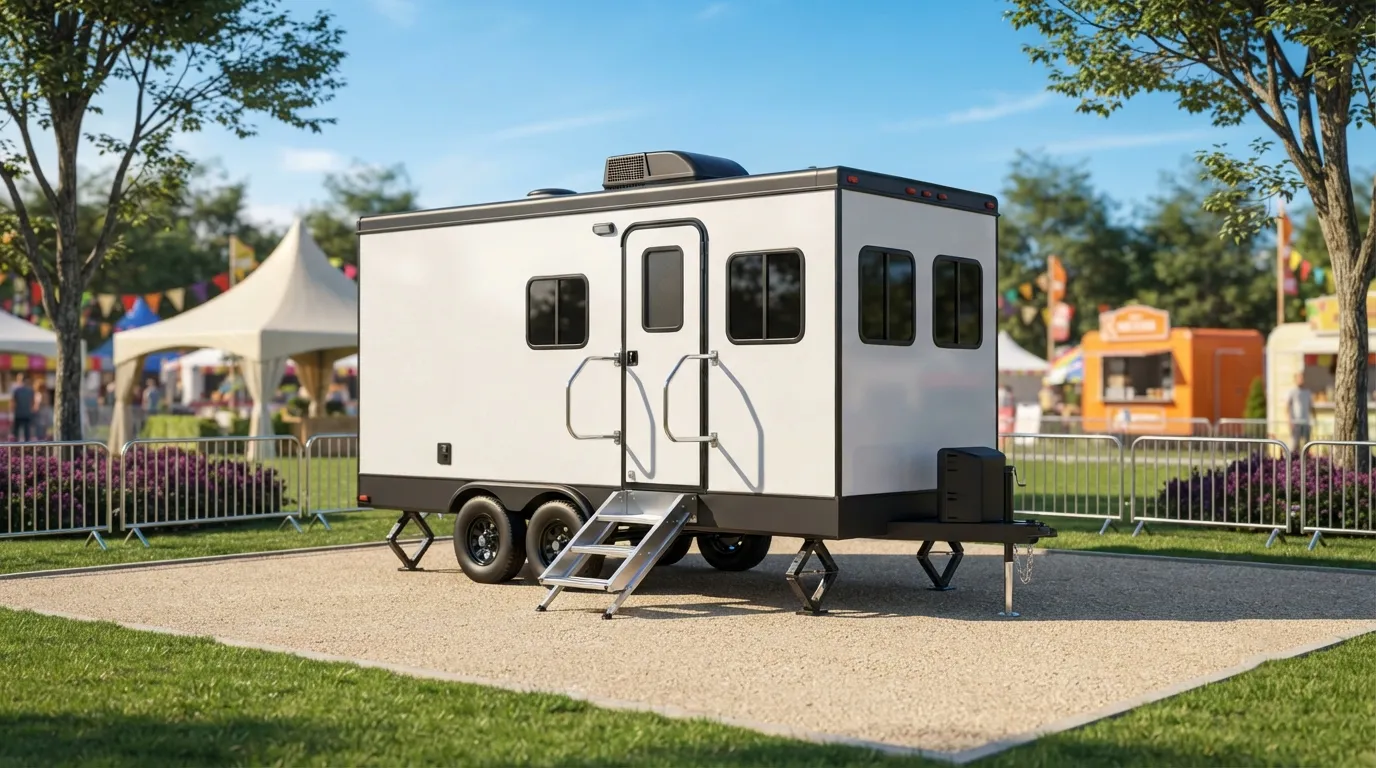
A flushable unit uses a small onboard freshwater tank and a foot pump or hand lever to rinse the bowl after each use, instead of relying on gravity and chemical breakdown alone. The deluxe flushable porta potty still holds waste in a sealed tank underneath, same as a standard unit, but the flush cuts residue on the bowl walls and keeps the inside noticeably cleaner between services. These run higher than a standard rental, which matters for weddings and multi-day festivals where guests notice details. Some come with a sink built into the exterior wall. If you are weighing whether the upgrade is worth it for a backyard wedding or a corporate picnic, wedding restroom rental and event restroom rental cover the tradeoffs. Camping trips ask the same question in a different setting. A camping porta potty works the same basic way, sealed tank, chemical treatment, portable design, just scaled down and built to be hauled in a truck bed rather than delivered on a trailer; see camping porta potty for that use case.
How does a portable sink work?
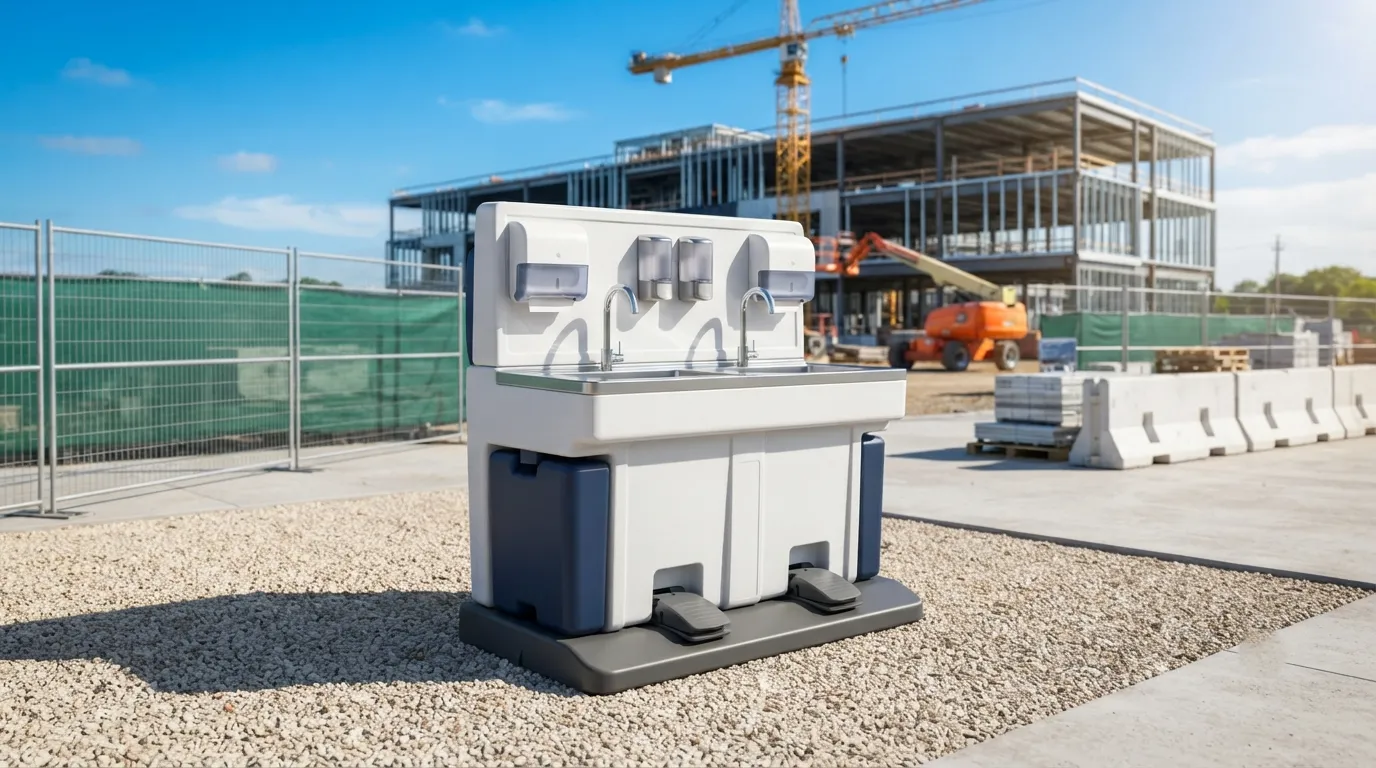
A portable sink runs off a self-contained fresh water tank, usually gravity-fed or foot-pump operated, with a separate gray water tank underneath to catch what drains out. No pipes, no city water line, no septic connection needed. Soap and paper towels sit in a dispenser on the unit, which matters because 29 CFR 1910.141(d)(2) requires washing facilities to have soap and towels or a hand-drying device, not just sanitizer. On job sites where crews apply paints, coatings, herbicides or insecticides, OSHA 1926.51(f)(1) requires washing facilities for exactly that reason, so a handwashing station rental or standalone portable sink rental often sits next to the toilets rather than replacing them. Farm crews in the Lodi area handling agricultural labor fall under a related rule, OSHA 1928.110, which sets one field sanitation facility per 20 workers within a quarter mile walk; see farm and agricultural restrooms for how that plays out locally. A hand sanitizer station rental is a fine add-on but it does not substitute for soap and water under the federal standard.
Why do porta potties need chemicals?
The blue liquid or packet dropped into a fresh tank is doing real work, not just masking smell. It breaks down toilet paper and solids, controls bacterial odor, and keeps the tank from foaming when the truck pumps it out. Different services use different chemical strength depending on the season. Lodi summers push heat into the 90s and higher, and heat speeds up bacterial activity in the tank, so a unit that sits three days in July needs a stronger dose than the same unit in December; see porta potty in winter for the cold-weather side of that. This is a different chemical from what a septic technician uses. Septic tank cleaning chemicals target a buried 1,000-gallon concrete or plastic tank meant to last years between service, not a portable unit meant to be pumped weekly. If your question is really about the tank buried in your yard rather than a rented toilet, septic pumping service and how often to pump a septic tank are the better read, since a residential tank is typically pumped every 3 to 5 years depending on tank size and household size.
How many toilets does OSHA require on a job site?
| Workers on site | Toilets required |
|---|---|
| 20 or fewer | 1 |
| 20 to 39 | 2 |
| 40 to 59 | 3 |
| 200 or more | 1 per 50 workers |
That table comes straight from OSHA 1926.51(c), the construction sanitation standard, and it is the number every foreman in Lodi gets asked about sooner or later. A construction worker running to a porta potty at lunch break should not be waiting in line, and that ratio is built to prevent exactly that. Full detail on how the math works with mixed crews and multiple shifts lives at OSHA Portable Toilet Requirements. For pricing across different rental lengths, Porta Potty Rental Cost in Lodi, CA breaks down day, week, and month rates, and construction site services covers how toilets pair with dumpsters, fencing and temporary power on an active build.
How often does a porta potty get serviced?
Weekly is the baseline under the ANSI/PSAI Z4.3 industry standard for up to 10 users on a 40-hour week. Busy sites or events need it more often. See How Often Are Porta Potties Cleaned for the breakdown by use case and headcount.
Do porta potties smell if they are maintained right?
A well-serviced unit should smell like chemical, not waste. The vent stack, deodorizer, and weekly pump schedule work together to keep odor down. Heat and overuse between services are what cause complaints; see Do Porta Potties Smell for the full answer.
Is a hookup or water line needed to run a porta potty?
No. Everything runs self-contained, tank in, tank out, which is why Lodi Porta Pros can drop a unit anywhere with truck access, from a Woodbridge job site 6.0 miles north to a backyard renovation in town.
Can a porta potty be placed on the street in Lodi?
Placement in the public right of way needs confirming with the city before delivery. See Porta Potty Placement Guide and Porta Potty Permit Requirements for what to check first.
How do camping porta potties differ from job site units?
Camping units are smaller, portable by hand, and built for occasional personal use rather than daily crew traffic. They still use a sealed tank and chemical treatment. Details are at camping porta potty.
Next step
Get a delivery date
Tell us the address, the dates and the headcount. We size the order and confirm the route.